




In the epic of Mahabharata, it was mentioned that the gopis as in the milkmaids used to draw Kolams to lessen their pain of not having Krishna with them. The art of Kolam making is practiced in almost all the states but known by different names like Alpana in Bengal, Mandana in Rajasthan, Muggulu in Andhra
 Pradesh, Puvidal in Kerala, Rangoli in
Maharashtra and Karnataka and Sanjhi in Uttar Pradesh.
Pradesh, Puvidal in Kerala, Rangoli in
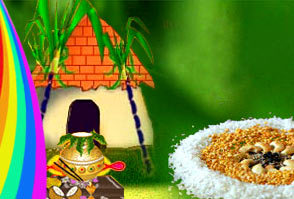
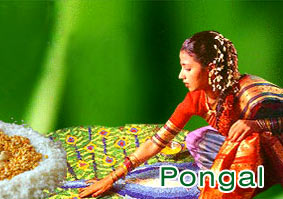
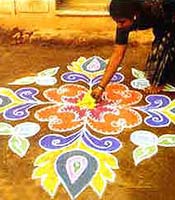
Maharashtra and Karnataka and Sanjhi in Uttar Pradesh.Kolam is not just an aesthetic art, but a means of expressing happiness and prosperity. The rice flour finds its way in the making of Kolam patterns for Pongal. The bright red color that is used to border the Kolam is believed to ward off the evil spirits. On the Pongal festive occasion, the entire family gets engrossed with the task of making Pongal kolam designs. A Kolam may be simplistic in pattern or may consist of intricate patterns.
